The Novice Farmer
(763) 689-2757
  • Home
  • Fruits
    • Cherries
    • Ground Cherries
    • Raspberries
    • Rhubarb
  • Herbs and Herbal Teas
    • Basil
    • Bay
    • Chamomile
    • Dill
    • Lemon Balm
    • Lemon Verbena
    • Mint
    • Miscellaneous Herbs
    • Oregano
    • Rosemary
    • Tarragon
    • Thyme
  • Vegetables
    • Eggplant
    • Garlic
    • Jerusalem Artichokes
    • Peppers
    • Sorrel
    • Spaghetti Squash
    • Tomatillos
    • Tomatoes
  • Eggs
  • About
  • Terms and Definitions
    • Alfalfa
    • Organic Farming
    • Heirloom vs. Hybrid
    • GMOs
    • Weed of the Week >
      • Chickweed
      • Dandelions
      • Purslane
      • Lambsquarter
      • Stinging Nettles
      • Mullein
      • Milkweed
      • Creeping Charlie
      • Ragweed
      • Wild Cucumber
      • Sandburs
      • Plantain
      • Virginia Creeper
      • Oxalis
      • Clovers
      • Bindweed
      • Sheep Sorrel
      • Joe Pye Weed
      • Chicory
      • Giant Hogweed
      • Cinquefoil
      • Vetch
      • Troublesome Trio
      • Common Mallow
  • Blog

Scarlet Runner Beans

8/3/2015

12 Comments

 
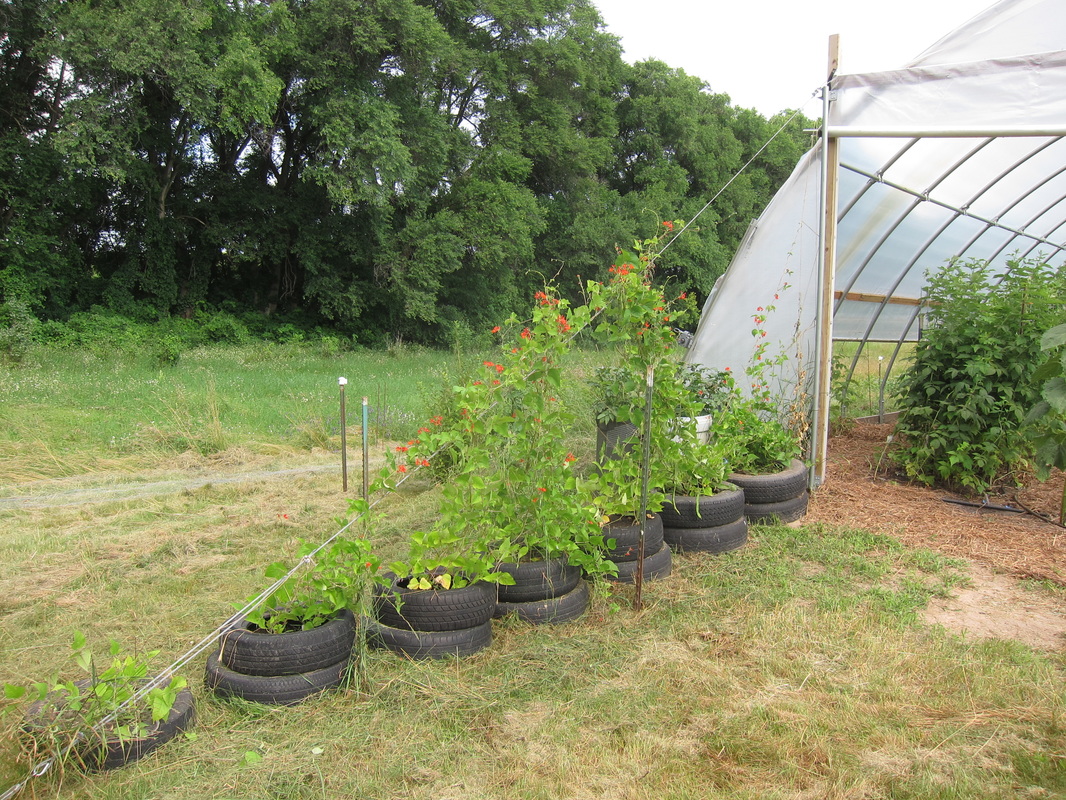
I planted scarlet runner beans on the guy wire of the hoop house to remind me not to run into it.  I have a thing for being able to eat what I plant and I heard that the scarlet runner bean would not only climb and identify the wire but that it was both attractive and edible.  So now that it is producing, I decided I should learn about it.  

Picture
Picture
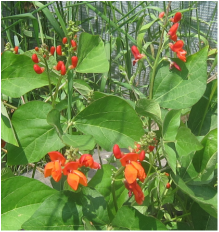
The scarlet runner bean is not only good for attracting butterflies and hummingbirds (and protecting humans from crashing into guy wires), it is also said to be the most productive of beans.  Interestingly, they are perennials.  In their native Central America, that is; the winter kills them here.  They were actually planted as an ornamental annual in English and Colonial American gardens as early as the 1600s.


Not only are the scarlet runner beans edible, but the starchy roots, young leaves and even the flowers are edible.  Some people even eat the immature pods raw   before beans develop but it is safer to cook them. Like most beans, scarlet runner beans contains small amounts of lectin phytohaemagglutinin which can be toxic in large amounts.  Dried beans need to be soaked and then cooked a long time to eliminate the risk. The older (harder, dryer) any bean is, the longer the cooking time required.
Picture
Picture
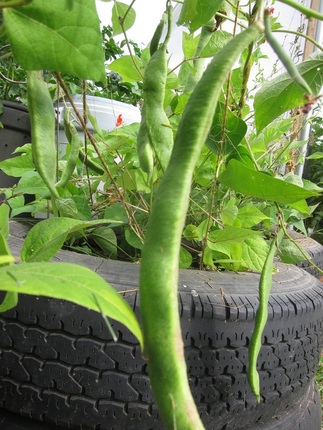
My beans are forming pods.  To keep them blooming and prettier, I should be deadheading the flowers.  But, since I like edible landscaping, even though the flowers are edible, I think I’d be more apt to eat the beans than the flowers.  One site suggested eating them as “haricots vert.”  I had no idea what that was…maybe some French recipe.  I looked it up.  “Haricots vert” is “the unripe fruit and protective pods of various cultivars of the common bean.”  In other words, it’s the proper term for green beans (aka string beans, or snap beans), who knew? 
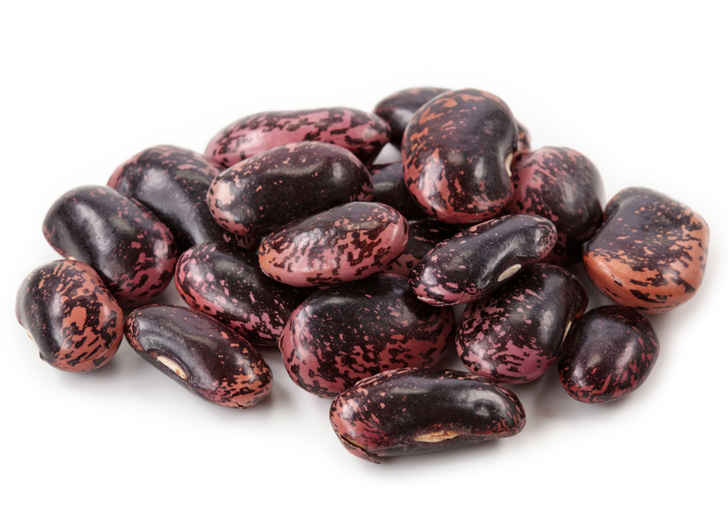
So you can enjoy the flowers (and munch on them while enjoying the beauty) or eat the leaves as an herb.  When they are young (before the seeds develop) you can cook the pods as can be cooked as green beans.  Or, you can let the inner beans mature and cook them fresh (like lima beans) or allow them to dry and used them like kidney beans.  When you are all done you can dig them up and cook the roots and eat them, too.  This just seems like an amazing plant.  How come I’ve never heard of it before?

12 Comments
Tony
10/6/2020 02:56:38 pm

I enjoyed your post on scarlet red runner beans. Learned so many uses. Do they return like prevails or only seasonal. I read that they are perennial, but here in CT the frost usually gets most plants. I do get to keep my arugula.

Reply
Heather W link
1/17/2021 11:50:20 am

Hello mate, nice post

Reply
Xiaomei
8/11/2021 03:02:33 pm

I like all the information you guys posted. I tried the first time this year, all I get is beautiful flowers, no pods so far. I planted regular green beans along with the scarlet emperor. My other green beans are already producing bean pods, but not scarlet emperor. Do you know why? I live in Oregon.

Reply
Andrea Oreck
9/7/2021 05:12:13 pm

The first year I planted runner beans I only got a handful of bean pods. The second year a crop of Borage came up an brought snow amazing amount of bees. They not only pollinated the Borage they loved the runner bean flowers. We had more runner beans than we could eat.

Trish
10/8/2024 03:43:20 pm

I was wondering the same thing this year- which was our first year with the scarlet runners… the pods started way later than any of my other beans but they did start eventually, and the beans inside the pods were huge!!
We are drying them to use in chili

Hanna
9/20/2025 06:07:43 pm

I live here in Oregon, too! Zone 8a.
So nice to hear from another grower on this bean adventure!
There are a number of growing region types here. The coast, the valleys, the east, with lots of environmental effects, not to mention the yearly differences in weather year by year, and infinitely more effects as is normal in any garden.
2025, this year, seems to be a gentle, not harshly hot, Summer in our region, (perhaps in much of the PNW?).
It is a few years later after your post, Xiaomei, and it is now my 1st year experimenting with Sunset Runner beans! A pretty soft coral pink flowered version of the scarlet runner bean.
I had not seeded or transplanted the beans as early as I would have liked to, quite tightly, around an old wooden orchard ladder. A number of negative and positive veriables for ours are, planting later than optimal, transplanting starts a little prominent (high up) in the soil exposed to drying sun effect and a challenge for young roots to reach irrigation. Our 1st year of drip irrigation hooked up to our beds (and worth our long time low cost "egg timer" like water valves benefited us greatly and watering by hand to help roots in the beginng.
We had young pods begin probably mid August. Mid- late September, now, we have had plenty of almost dry pods with large seeds.
Many variables for us to consider;
What I dont know,
Density of planting and potential for pollinator access to flowers(seemed to affect ours a lot with pumpkin leaves and dense bean plants reaching far horizontally for the trellis,
Harvesting visibility & access,
Benefits of direct seed/or starts,
Env. temps for direct seeding/
Careful planting for delicate start roots,
Root access to even water, Probably prevent lingering pooling in general, or drying out too much, especially before establishing,
Warm light for Arial parts. Competition with other plants (pumpkins, this year, for us), spacing,
nutrients or positive bean/legume bacteria in soils for symbiosis and nitrogen benefits(the bed had been resting fallow for 1-2 years and clover growing in that area could have aided the beneficial soil bacteria for the beans in this case,
# of plants per expected harvest numbers,
How often/much harvested at what stage of pods affects production. Predation by animals (I do not think the deer have noticed them)
Once established they can be stout growers, but delicate when it comes to harvesting.
I am really excited for the possibility of overwintering and am planning to look into the best way to overwinter them. Possibly Organically grown straw (to avoid garden killing herbacides, especially for bean/legume plants) and possibly a tarp weighted over that because of our heavy rains/ and possibly a cold winter this year in PNW? Though we probably won't need it because our clay (frame free) beds are highly amended with sand and compost and sit a number of inches above the natural soil height. We have done no till for years, but are wanting to use thoughtful tilling in this bed as an experiment (because of major hard clay 'hard pan' in our summer heat) and it is going well so far.
Xiaomei, have you planted Runner Beans again since, or do you plan too? How is it going?! How is the eating and do you have any favorite dishes you like to put them in? I am new to that part as well.

Blah blah blah, sorry about all of that. And apologies, I've done my best to edit in this tiny window. Please ignore any grammatical mistakes, especially if they are obvious.

Julie
10/5/2024 07:05:18 pm

I love this information, there’s a lot to learn. Thankyou for sharing and am I ever glad I saw this, I’ve been planting these for years and all I knew was they are a beautiful plant a privacy screen with beautiful leaves and flowers and delicious and they always get huge ( even in the shady spot this year ).

Reply
Topeka Spanking link
6/4/2025 01:42:03 pm

I'm impressed by how versatile this plant seems to be.

Reply
Vancouver Islander
9/10/2025 11:13:16 am

I grow Scarlet Runners for their climbing ability. I have a small garden and use as much space vertically as possible. The Scarlet red flowers are showy and attract bees. I have an allergy to dried legumes, so I was curious about eating the "bean" before they mature and dry. I will cook some to try.
As the young green pod growss and before there is a bean inside, I can't wait to fry them in a pan with a bit of water and butter. A pod 5 to 6" long is perfect and tender. They are delicious!
Once the pod has mature beans and begins to dry, I leave them on the plant and let nature take its course over the winter months. If the yellowed pod is dry and brittle, the seeds inside will be matured enough to plant the following spring. If the pod is not dry, pick them and lay on a flat surface in the sun.
Here, it is September, and mine are still blooming and producing lovely delicate green beans for my dinner plate.
Enjoy!


Reply
Luann
9/20/2025 06:20:13 pm

I've been nervous staying young beans to eat pods, and plump green pods for the soft pink and black beans inside, which I blanch and peel to reveal the bright green edamame similar looking being inside. I've been eating those and they are delicious! Some being pods have already dried and I have saved seed for next year. I suggest planting three to four inches apart per bean. However, some beans went Rogue and seeded themselves. They want to grow upwards, so bamboo poles and trellises to keep them happy. Very little space on the ground is needed. As long as they have something to climb on

Reply
Lizz Cook
9/28/2025 08:20:59 am

I was told that if it is very dry to spray the flowers with a mist of water in the evening. The early flowers seem to drop off but later ones set better. It was a very dry summer here in UK and most if the early flowers dropped though I had more beans than I could eat.

Reply
Sonja Lewis
11/14/2025 04:52:02 pm

Commenters give lots of info on growing, harvesting and cooking this extraordinary bean, but no recent posts has emphasized or given additional info on mature beans' MULTIPLE toxicities. (source: Arcsphere.blog) Tender young pods--it's safest to cook till tender, not eat raw. Bean seeds that are maturing, even while fresh, are as toxic as kidney beans. Must be THOROUGHLY cooked.
I love this plant and the cooked pods are tasty, and now that I live in a cool-summer area, I'll grow them for sure.

Reply


Leave a Reply.

        One of the things I enjoy most about gardening is the solitude.  It is a place to escape the noise and busy-ness of the day, to quiet my soul and listen to the birds, to bask in the beautiful creation and worship the Creator.    
        Sometimes the mood is serious and awe inspiring but other times it's 
    the delightful 
    entertainment of a silly chicken or a pensive toad.
        I invite you to join me in this journey of discovery and re-creation.
                              Donna 

    Archives

    March 2017
    March 2016
    February 2016
    January 2016
    December 2015
    October 2015
    August 2015
    July 2015
    June 2015

Powered by Create your own unique website with customizable templates.